Durango began as a railroad's idea. In September 1880 the Denver and Rio Grande Railroad laid out a town on the Animas River. It wanted a depot and smelter site for the silver and gold mines of the San Juan Mountains. Within a year it had about 2,400 residents and at least 20 saloons. The valley's story starts long before that, though, and the railroad's version is messier than the postcard.
Who lived here before Durango?
People, for a very long time. The City of Durango says people camped along the Animas River for thousands of years. Archaeologists have found signs of a population boom in the late 8th century, roughly 1,200 years ago. Ancestral Puebloans lived across the region, including at what is now Mesa Verde National Park, before they left their last homelands. Ute people were living in the area by the 16th century, per the Advisory Council on Historic Preservation. The Southern Ute Indian Tribe remains a vital presence in La Plata County. Spanish explorers got here next, at least on paper. Dominguez and Escalante passed through on August 9, 1776, and the river already had a name. Downtown Durango tells the legend this way: some of the explorers vanished along it and never received last rites, so it became the River of Lost Souls. Their souls, the story goes, were stuck in Purgatory. Somebody eventually named a ski mountain after that. Fair enough.
What was Animas City?
Animas City was here first. A farming and ranching settlement about two miles north of today's downtown, it was already in place when the railroad showed up. Western Mining History says miners had been scrambling around the valley for some twenty years by then, and the farming was good. Gold fever had hit Silverton, 50 miles north, in 1872.
Then the railroad came knocking, and Animas City said no. Western Mining History says its leaders refused to work with the railroad, so the D&RG shrugged and rerouted two miles south to start a brand-new town. The city's own history adds that the company bought the downtown land under assorted names to hide who was behind it. When the first train steamed north through Animas City in 1881, it didn't even stop. Animas City ended up absorbed into Durango and is now the Uptown Main area.
How did the railroad found Durango?
On purpose, and by the numbers. In September 1880 the D&RG began building a town at the foot of the mountains. President William Jackson Palmer, who had already founded Colorado Springs, joined William A. Bell and John A. Porter to form the Durango Trust, which sold lots on the new townsite. Civil engineer Charles Perin surveyed the grid, with wholesale businesses along the tracks on Main Avenue, shops on 2nd Avenue, and homes on the hill, according to Downtown Durango.
The name came from Mexico. The city says former territorial governor A. C. Hunt, who had traveled through Durango, Mexico, thought the places looked alike, and the name stuck. It's often traced to a Basque word meaning water town. An ad calling Durango the "New Denver of the Southwest" pulled in roughly 2,000 settlers in the early 1880s. By 1881, 134 businesses had opened, at least 20 of them saloons, historian Duane Smith writes in Rocky Mountain Boom Town. The town was incorporated in 1881. You can still walk that grid on Main Avenue, now a National Register historic district.
When did the narrow gauge reach Silverton?
Fast, as these things go. The Denver and Rio Grande reached Durango in July 1881, then built the last 45 miles up to Silverton in about nine months. The first train rolled into Silverton on July 10, 1882, according to railroad histories. The Durango depot dates to January 1882 and still stands. The line existed to haul silver and gold ore down the Animas canyon to the smelters.
The mines didn't last, but the railroad did. Railroad histories say the line has run continuously since 1881, through slides, floods, snow, war and financial trouble, and it's now a National Historic Landmark District. By 1947 the Silverton branch was in danger of being abandoned, and a determined staff promoted tourism to keep it alive. Hollywood helped, and the railroad says films shot here included Ticket to Tomahawk, Across the Wide Missouri, Denver & Rio Grande, Viva Zapata and Around the World in 80 Days. Today the Durango and Silverton train carries tourists over the same track.
What did the smelter do?
It made the town rich, and it left a mess. The San Juan and New York Smelting Company, known as the Durango Smelter, operated below Smelter Mountain from 1882 to 1930. It processed lead, copper, silver and gold from mines across southwest Colorado. It handled over $1 million in metals by 1887. Workers went on strike there in 1903 and 1904. It reopened during World War II to process uranium for the war effort, and the railroad says it kept processing uranium instead of silver into the late 1940s. The cleanup came late. The U.S. Department of Energy spent 1985 to 1987 on the tailings site, and Wikipedia says the ground is now a city dog park and the start of a popular hike. The Smelter Mountain off-leash area sits at the mountain's base, and the dog-friendly Durango guide has the rules.
What disasters and booms shaped the early town?
Fire, mostly. In 1889 a blaze that started at a fruit and candy store at Main Avenue and 10th Street burned seven blocks. It took City Hall, the new library, the courthouse, three churches and many homes. The town rebuilt.
Then silver collapsed. The Silver Crash of 1893 shuttered banks, including the Smelter National Bank, which had lasted only about five years, according to the Clio walking tour. The same year saw the Colorado Ute Power Plant go up. The Advisory Council on Historic Preservation notes it was restored after a nearly decade-long community effort and reopened as a museum.
Tourism grew into the gap. The San Juan National Forest was created in 1905 and Mesa Verde National Park followed in 1906. The population doubled to 4,686 by 1910, according to the City of Durango. Not everything was celebration. The railroad says the 1918 flu epidemic killed 10 percent of Silverton's population in just six weeks.
How did Durango become a college and ski town?
Slowly, over the 20th century. The City of Durango says it bought land for the airport in 1946. Fort Lewis College moved to town in 1956, on 193 acres the city provided for $8,400, and became a four-year college in 1962. Purgatory, the ski area, opened in 1965.
Fort Lewis has its own history. The first Fort Lewis was an Army post built at Pagosa Springs in 1878 and moved to Hesperus in 1880. In 1891 the federal government turned it into an off-reservation Indian boarding school. In 1911 it passed to the state with a condition: Native students would be admitted without tuition. The college still honors that promise, according to Fort Lewis College. The college also acknowledges that the land is the ancestral territory of the Nuuchiu (Ute) people, who were forcibly removed by the United States government.
Durango timeline at a glance
| Year | What happened |
|---|---|
| Late 700s | Population boom in the Animas valley, per the City of Durango. |
| 1776 | Domínguez and Escalante pass through; the river is already named. |
| 1872 | Gold fever hits Silverton. |
| Sept. 1880 | D&RG founds Durango. |
| 1881 | Town incorporated; train reaches Durango in July. |
| 1882 | Smelter opens; train reaches Silverton July 10. |
| 1889 | Fire burns seven blocks. |
| 1893 | Silver Crash; Colorado Ute Power Plant built. |
| 1906 | Mesa Verde National Park created. |
| 1946 | Airport land purchased. |
| 1956 | Fort Lewis College moves to Durango. |
| 1965 | Purgatory ski area opens. |
| 1980 | Main Avenue Historic District listed on the National Register. |
Where can you see this history today?
More than you'd expect.
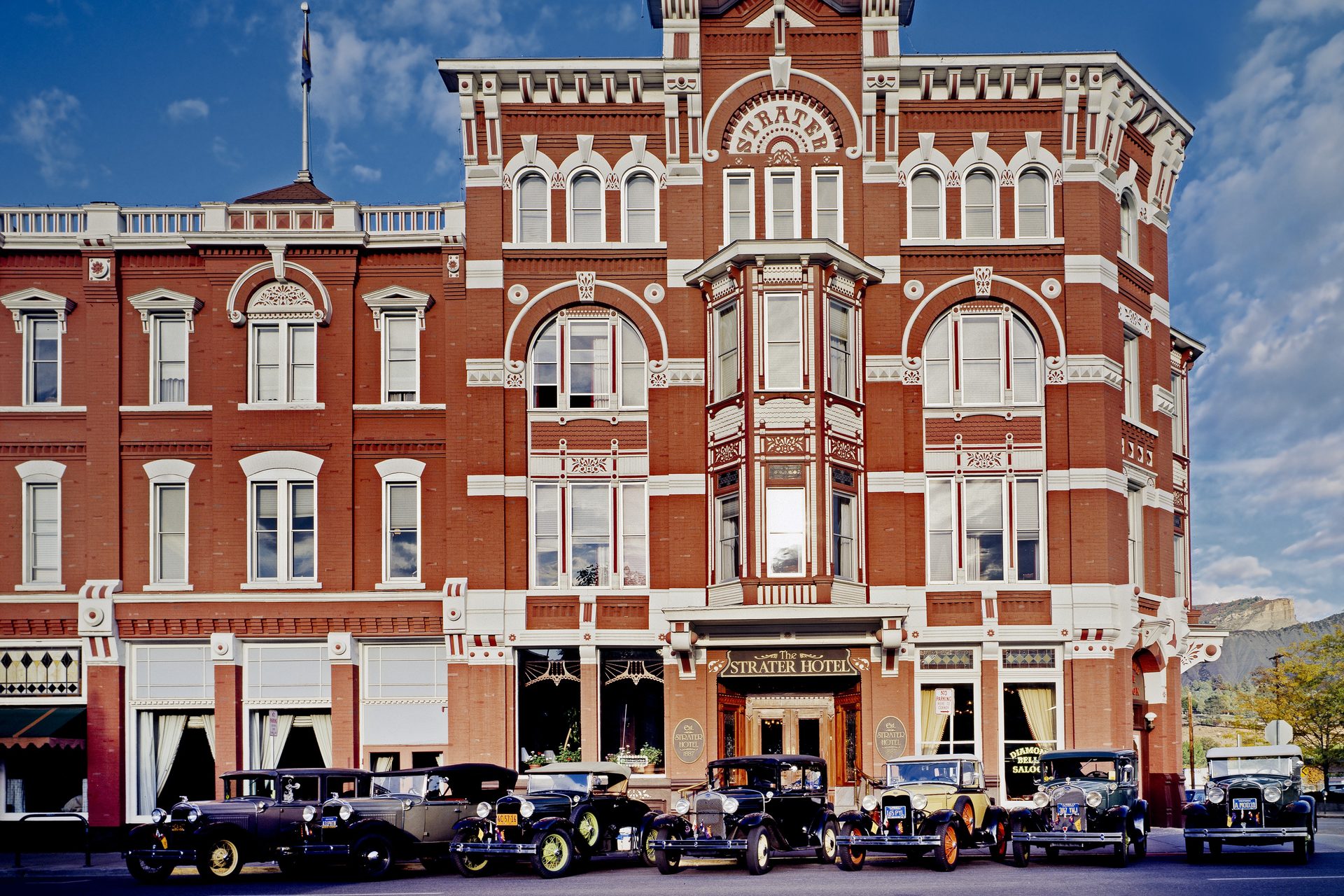
- Main Avenue has the Strater Hotel (1887), the Newman Block, El Moro and the downtown saloon district, plus a free self-guided walking tour.
- The train depot and railroad museum anchor the south end of Main.
- Smelter Mountain is the site of the old smelter and a popular hike.
- The Animas Museum and guided walks such as Horsefly History Tours and Ghost Walk Durango fill in the stories, per Downtown Durango.
- Fort Lewis College sits on a mesa above town.
Plan your visit around the stories you care about, then check things to do and the best time to visit Durango. For where to sleep, where to stay in Durango starts in the same historic hotels.